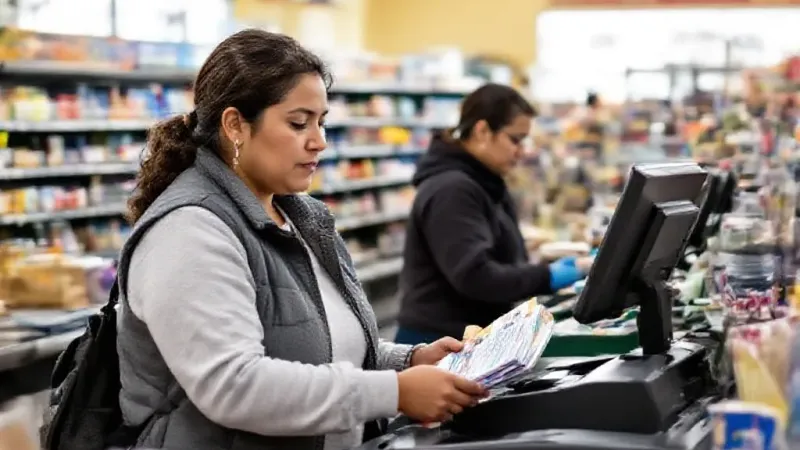
Ohio-based grocery chain Kroger faces accusations of frequently overcharging customers, with prices at the register often higher than those advertised on shelves, according to a recent analysis by a consumer advocacy group. The Center for Responsible Food Business, a nonprofit focused on ethical food industry practices, launched a campaign called "Kroger's Pricing Problem" last May, alleging that these incorrect prices typically favor the company.
The Center for Responsible Food Business based its findings, in part, on government records covering 389 price inspections at 101 Kroger stores across nine Ohio jurisdictions between 2022 and mid-2026. The group’s report indicates that 15% of these inspections failed. It further detailed 474 instances of overcharges compared to 170 undercharges, representing nearly a three-to-one ratio where customers paid more than the displayed price. In Butler County, specifically, the report noted that half of the inspected Kroger stores failed their price checks.
The report from the Center for Responsible Food Business also suggested that minority customers and seniors appear particularly susceptible to incorrect pricing. As an example, the report cited a Kroger location on Siebenthaler Avenue in Dayton, which failed three separate government price inspections. Records for this store included complaints alleging "senior abuse" related to its pricing practices. U.S. Census Bureau survey data mentioned in the report indicates that the store’s ZIP code is 77% Black, with one in four residents living below the poverty line.
A Kroger spokesperson addressed the report via email, emphasizing the company's commitment to pricing accuracy. The spokesperson stated that Kroger "takes pricing accuracy seriously" and works quickly to correct any issue brought to its attention. They added that Kroger associates strive daily to provide service and value across millions of transactions in Ohio. The spokesperson further contended that the Center for Responsible Food Business's report used "selective data with unverified claims" and did not accurately reflect the everyday experience of customers.
The Center for Responsible Food Business campaign also solicited complaints from customers through TV advertisements and an online portal, with an appeal asking, "We’re tired of getting ripped off at the register." Many respondents stated that when they reviewed their receipts, they found discrepancies between the advertised price on the shelf, in weekly ads, or on digital coupons, and the price charged at the register. The report indicated that 557 testimonials, or 29% of submissions, described this specific issue. The group noted that this count should be considered a "floor rather than an estimate of prevalence," as many shoppers do not routinely compare shelf prices to receipts and might not detect an overcharge. Some individuals identifying themselves as Kroger workers also contacted the Center for Responsible Food Business, attributing pricing inaccuracies to understaffing. One person identifying as a Kroger worker in Texas wrote in the group’s survey that reduced hours mean there aren't enough employees to update price tags when new advertisements come out, making it difficult to re-tag an entire store within an eight-hour shift.
This is not the first time Kroger, which is the third-largest grocery chain by sales in the United States, has faced scrutiny over its pricing and market practices. In a 2024 trial regarding a proposed merger with Albertson's, the Federal Trade Commission presented testimony from a Kroger executive who acknowledged that the company had increased the price of milk and eggs above the rate of inflation. During the same case, a former employee testified, accusing Kroger of inflating prices in neighborhoods where it faced limited competition.