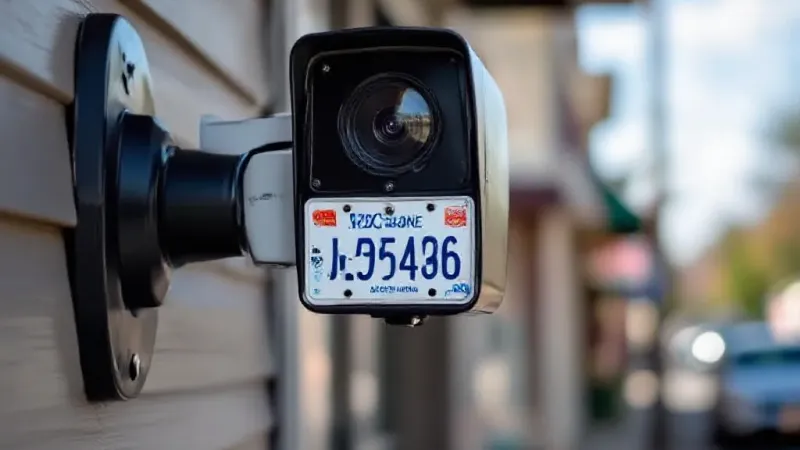
Ohio Attorney General candidates, Keith Faber and John Kulewicz, are presenting contrasting proposals for the use and regulation of Flock cameras, the automated license plate readers that have quickly spread among law enforcement agencies. Their differing views come as public scrutiny intensifies over the technology and its potential for misuse.
Republican candidate Keith Faber wants Ohio lawmakers to categorize abuse of the Flock camera database as a felony, while still allowing the system for legitimate law enforcement purposes. In a press release, Faber stated that Flock cameras are valuable tools for police, helping to recover stolen cars, locate missing children, and apprehend violent criminals. He emphasized that the data collected exists specifically to solve crimes, and any misuse that violates the constitutional rights of law-abiding Ohioans should be considered a crime. If elected, Faber has promised to collaborate with the legislature to ensure the Flock database receives the same legal protections as the state's central law enforcement database, LEADS, where misuse is already a felony under Ohio law. He conveyed confidence that lawmakers would be receptive to the Attorney General's request to safeguard against potential abuses of the tool.
Democratic nominee John Kulewicz believes Faber's approach does not go far enough. In a statement, Kulewicz advocated for the General Assembly to enact a comprehensive data privacy law. He raised concerns that because Flock is a private company, the data it gathers could potentially be transferred to third parties. Kulewicz explained that citizens are tracked not just by license plates but also by their digital footprints. He argued that any legislation should restrict the collection and use of personal data and prohibit its misuse, particularly by "modern algorithmic decision-makers."
The debate over Flock cameras also involves a bipartisan group of Ohio lawmakers who are urging the state’s transportation agency to revoke existing Flock permits. Ohio State Representative Levi Dean, a Republican from Xenia, is currently drafting legislation. His proposed bill aims to prohibit government agencies from deploying these cameras or accessing their database without first securing a warrant. Dean also seeks to ban the sale of surveillance data. In a press release, Dean acknowledged the utility of Flock cameras as valuable tools but cautioned that a system capable of tracking innocent Americans could be exploited if in the wrong hands. He posed a question about the implications of widespread use during lockdown orders and asserted that "Government power must have limits."
The public's unease with government surveillance has intensified following news investigations that revealed instances of police abusing the Flock database. These revelations have contributed to a growing backlash against the technology.
Several cities have recently grappled with the controversy. Late last month, Columbus Mayor Andrew Ginther announced new safeguards for the city's Flock program, initially arguing the city could both protect privacy and use the camera network. However, a week later, he reversed course and paused the program. This decision followed a USA Today report indicating that one Columbus Police officer conducted 272 searches for a single license plate over a year. More recently, the city of Reynoldsburg terminated its Flock program entirely. Mayor Joe Begeny cited examples of alleged misuse in a video posted to Facebook, though he declined to elaborate due to ongoing investigations.
Both Faber and Rep. Dean have used the phrase "we can do both" in their discussions, suggesting a middle path between catching criminals and protecting constitutional rights. However, finding this balance has proven challenging for communities.