
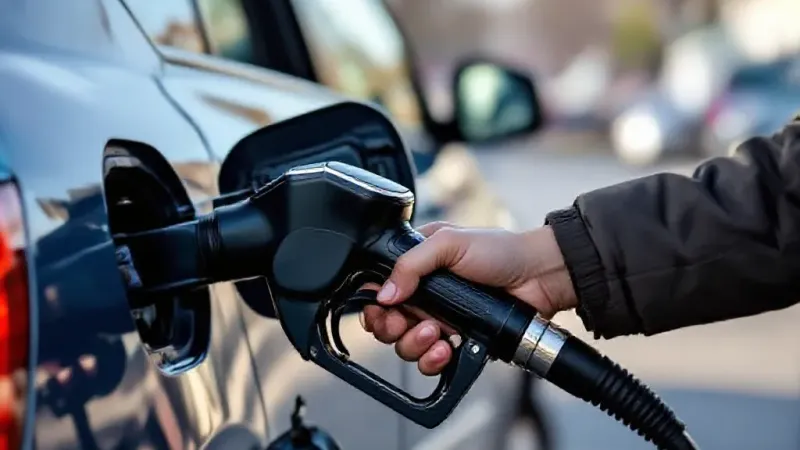
Ohio lawmakers approved a 90-day state gas tax holiday on Wednesday, acting with broad bipartisan support to address rising fuel costs. Governor Mike DeWine's office stated he plans to sign the legislation, which will suspend the state’s 38.5-cent-per-gallon gasoline tax and 47-cent-per-gallon diesel tax for the remainder of the year. The measure allocates $725 million from the state’s general fund to maintain roads and bridges, which are typically funded by fuel taxes. The move comes as average regular gasoline prices reached $4.43 a gallon on Wednesday, while diesel was $6.41 a gallon, according to the AAA motor club.
High gas and diesel prices, tied to the war in Iran, have become a significant concern nationwide, with affordability remaining a top voter issue ahead of critical midterm elections. Ohio joins at least one-fifth of states that have implemented some form of fuel tax relief, many taking action within the past week, as an Associated Press review indicates. Gas prices have risen roughly 50% since the war with Iran began, according to AAA, with diesel just shy of a record high set last week.
The push for fuel tax relief took center stage in Ohio's gubernatorial race. Republican legislative leaders quickly recalled lawmakers to the Statehouse after Democratic gubernatorial candidate Amy Acton called for a gas tax holiday last week. Republican rival Vivek Ramaswamy announced a similar plan just hours later. Rob McColley, Ramaswamy’s running mate and Ohio Senate president, used a technical maneuver to expedite debate on the measure, suggesting that Democrats were preparing for "theatrics." Senate Democratic Leader Nickie Antonio noted that one proposal would have called for an end to the Iran war.
State Sen. Michele Reynolds, a Republican co-sponsor of the legislation, stated it "will provide much-needed relief to Ohioans at a time when they are feeling the pressure of gas prices continuing to rise." However, Democratic state Rep. Allison Russo, a candidate for secretary of state, criticized the move as an election-year "stunt" that she estimates will save Ohioans an average of $55 over the next three months.
Other states have also taken steps to address fuel costs. Georgia became the first to suspend its fuel taxes in March after prices increased, with Republican Gov. Brian Kemp extending the break and announcing a 30-day resumption that began Tuesday. Indiana Gov. Mike Braun, a Republican, has extended a fuel tax exemption multiple times, with the current version active through October 5. Utah has a six-month, 6-cent reduction in its fuel tax in effect through the end of the year, while Illinois and Kentucky delayed planned July fuel tax increases.
Beyond broad tax holidays, some states have focused relief on specific industries. Republican governors in Alabama, Louisiana, Nebraska, and Texas have issued executive orders in the past week to provide fuel tax relief for the agricultural sector during harvest season. These orders temporarily waive enforcement of rules on dyed diesel fuel, which is exempt from state taxes but typically restricted to off-road machinery. This allows its use in highway vehicles, with governors noting that reduced transport costs could affect grocery prices. California also ended its stricter summer fuel requirements early on Monday, citing a state law that mandates reevaluation of regulations when retail gas prices rise significantly, potentially saving up to 15 cents a gallon, according to the National Association of Convenience Stores.
Consumers should be aware that state actions on fuel taxes may have a delayed effect. Fuel prices can be volatile, and taxes are typically applied at the wholesale level, not directly at the retail pump. Jeff Lenard, a spokesperson for the National Association of Convenience Stores, explained that customers expect immediate price reductions, but "it’s way more complicated than that." He noted that the costs and changes occur "further upstream," and retailers may need to sell existing, already-taxed product before they can offer the new, untaxed fuel at a lower price.