
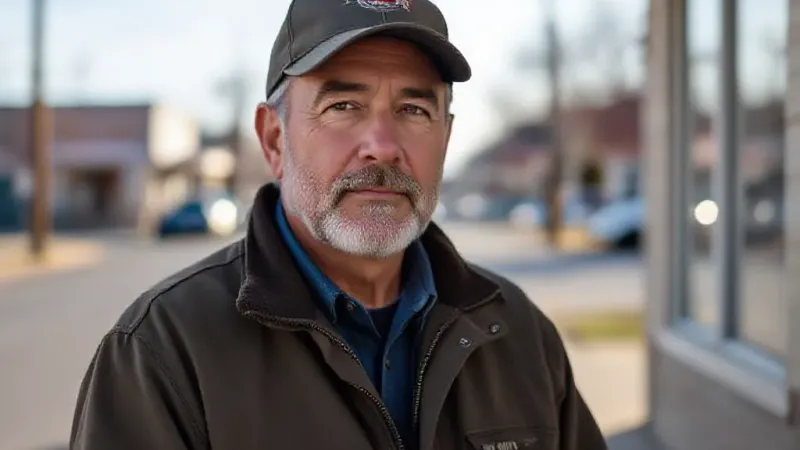
An Ohio resident has been waiting 13 months for a $6,000 unclaimed funds check, illustrating a backlog that state officials are working to reduce after a public awareness campaign led to a dramatic increase in claims. William Klever told 10 Investigates that he has been unable to get a clear answer about when he will receive the money, which he filed for on behalf of his son, who died years ago. The Ohio Department of Commerce states that the average claim can take up to 120 days to process, but Klever’s claim has far exceeded that timeframe.
Klever’s experience highlights the challenges some Ohioans face navigating the state’s process for receiving owed funds. In July, the department sent him a letter requiring him to go to court within 60 days to establish the legitimacy of his claim. Klever stated that he submitted all the required court documents in August. However, when he contacted the department last week to confirm his paperwork was complete, he said a representative told him another step remained but would not explain what the process involved. Klever expressed frustration to 10 Investigates, stating the lack of information has left him questioning how the state communicates with people awaiting their money. He believes the government should be more transparent about its processes, shortages, or problems.
Klever’s frustration intensified after he saw a state commercial featuring Lt. Gov. Jim Tressel encouraging Ohioans to check for unclaimed money. While the campaign aimed to help residents find funds, Klever argued the state should also be capable of processing the claims it encourages people to file. He suggested that Lt. Gov. Tressel should “coach them up on how to possibly speed up these claims and speed up the process.”
Lt. Gov. Tressel’s office told 10 Investigates that the Ohio General Assembly required the Department of Commerce to launch the public awareness campaign about unclaimed funds. A spokesperson for Tressel’s office confirmed that the lieutenant governor supported bringing attention to the program but is not involved in the division’s daily claims processing. The spokesperson added that the department continues to process claims and return money to rightful owners, directing further questions about the program’s administration to the Department of Commerce.
Akil Hardy, Superintendent of the department’s Division of Unclaimed Funds, acknowledged that the state’s effort to reach more residents produced a significant and unexpected increase in applications. Before the campaign, the division typically initiated about 1,500 claims in a week. Following the advertising push, Hardy reported to 10 Investigates that the division received 82,000 claims in just two days.
To manage the surge in volume and address the backlog, the state has made several changes. These include making adjustments to its approval process, hiring 20 additional employees, and automating part of its system. Superintendent Hardy explained that some claims still require additional review to ensure that payments are made to the correct individuals. This necessary scrutiny can extend the processing time, particularly for claims involving circumstances that require extra documentation or legal proof. Hardy emphasized that “Ultimately we want to pay out to the right person,” noting that paying out to the wrong people would be a far worse outcome.
Unclaimed funds represent money that businesses and other entities are required to turn over to the state when they cannot locate the rightful owner. Ohio’s outreach campaign was designed to encourage residents to check if money is being held in their names or for eligible family members. For William Klever, however, the state’s increased awareness efforts have not yet resolved his personal claim. He stated that the $6,000 sum is substantial enough that he cannot simply abandon the process, despite the prolonged wait. Klever remarked that if it were only a few dollars, he would likely let it go, but it is “a good amount of money.” While the department aims to improve processing times through increased staffing, process changes, and automation, Klever’s ongoing situation illustrates the uncertainty that some claimants still face as they await the state’s completion of their reviews.