
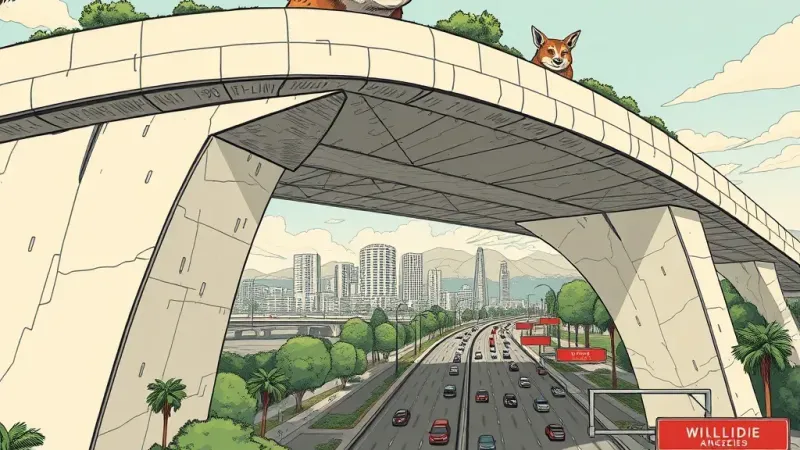
LOS ANGELES—Hailing a triumphant victory for eco-conscious urban planning and multi-million-dollar vanity projects, city officials proudly cut the ribbon this week on the Wallis Annenberg Wildlife Crossing, a sprawling, $87 million concrete-and-dirt overpass spanning ten lanes of the 101 Freeway designed exclusively to help local cougars, bobcats, and deer safely commute to their preferred artisanal coffee shops.
The monumental structure, which stretches across 200 feet of highway traffic like a hanging garden for apex predators, was heavily funded by a coalition of wealthy donors, green-tech venture capitalists, and guilt-ridden Hollywood executives who desperately wanted to feel like they were saving nature without actually having to look at a struggling person on their way to Nobu.
"For too long, the majestic mountain lions of the Santa Monica Mountains have had to endure the indignity of playing Frogger across ten lanes of heavy traffic just to find a mate or forage for suburban house cats," said California Department of Transportation director Carrie Miller, adjusting a designer hardhat that cost more than a used Honda Civic. "Now, thanks to native landscaping, acoustic baffling, and a strictly enforced foot-traffic policy that keeps out the poor, our local fauna can finally enjoy the upscale, unobstructed migration corridor they so richly deserve."
According to environmental impact reports, the bridge has been meticulously engineered to cater to the exacting psychological needs of the modern Southern California wildlife. The crossing features state-of-the-art soil compaction, hand-planted chaparral shrubs sourced exclusively from certified organic nurseries, and hidden surround-sound speakers playing gentle lo-fi acoustic tracks to soothe anxious deer experiencing rush-hour traffic anxiety. City planners also confirmed that motion-activated trail cameras will monitor the bridge 24/7 to ensure that raccoons do not loiter or set up tents on the multi-million-dollar turf.
"We want to make sure the ecosystem here remains pristine and undisturbed by the chaotic realities of modern civilization," Miller added, staring blankly past a row of makeshift encampments nestled directly beneath the freeway bridge’s towering concrete support pillars. "If you’re a bobcat looking to cross the highway in absolute serenity, this is the premier luxury destination. If you’re a human being experiencing a catastrophic housing crisis three hundred feet below the wildlife promenade, we kindly ask that you respect the zoning laws and stop harshing the cougars' vibe."
The project, which took over a decade of bureaucratic planning and fundraising to complete, has already drawn massive praise from local property developers who note that wildlife crossings significantly boost the curb appeal of nearby multimillion-dollar hillside estates. Real estate agents are reportedly already updating property listings to highlight the neighborhood's new "nature-adjacent walkability," pitching the overpass as an exclusive amenity for high-net-worth wildlife enthusiasts.
However, not everyone is convinced the local fauna got the memo. Local wildlife experts admit that despite the tens of millions of dollars spent on native shrubs and scent-marking posts, local coyotes have thus far shown zero interest in using the designated eco-bridge, preferring their traditional method of blindly sprinting across active rush-hour traffic lanes while carrying stolen Amazon packages.
"Look, we built the bridge, we planted the deer grass, and we installed the mood lighting," said lead landscape architect Marcus Vance, visibly sweating through his Patagonia vest. "If a mountain lion chooses to ignore the state-of-the-art overpass and instead wanders into a downtown Trader Joe's parking lot, that's on them. At that point, it’s a personal accountability issue."
As closing ceremonies concluded, ribbon-cutters released a pair of rehabilitated hawks who immediately flew straight into a billboard advertising luxury apartments, perfectly capturing the delicate harmony between urban expansion and the great outdoors.