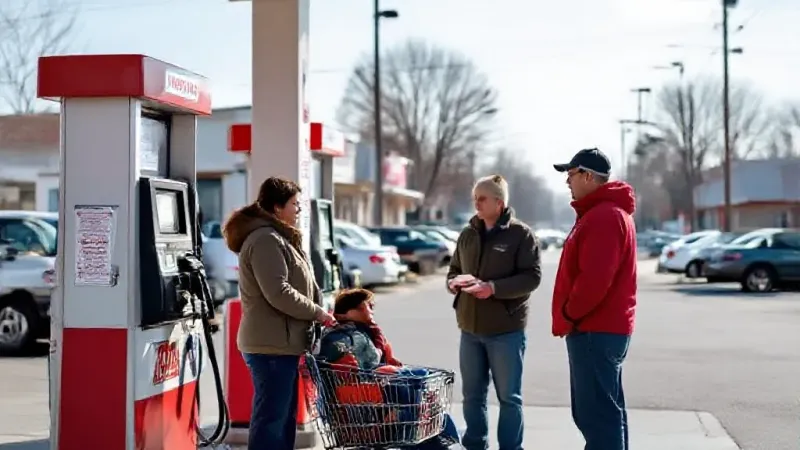
As the November 3 midterm elections approach, campaign messaging is intensely focused on transgender issues, even as many households grapple with a deepening affordability crisis. Residents pumping gas at $4.50 per gallon are likely more concerned with rising costs than with political stances on transgender topics, according to energy experts and prediction markets forecasting gas prices potentially breaching the $5.00 threshold nationwide soon.
Diesel, essential for trucks, farm machinery, and construction equipment, hit a record national average of $6.51 per gallon on Monday, marking the highest level ever recorded in the United States. These rising fuel costs, exacerbated by what is described as Donald Trump's war of choice with Iran and a Middle East war actively spreading, contribute to ballooning expenses for families that are already struggling to break even.
Many Americans are reportedly focused on their paychecks, struggling with maxed-out credit cards, cutting back on groceries, and facing the prospect of forgoing healthcare or dealing with overwhelming monthly bills, rent hikes, and soaring medical premiums. Yet, political discourse often diverts from these financial pressures. Republicans, for instance, are described as recycling "ugly anti-trans ads" from the 2024 election cycle for the current 2026 midterm campaigns.
These political ads often highlight issues such as the participation of transgender athletes in women's sports, government decisions regarding transgender minors, and bathroom bans for transgender Americans. The source material claims these are "manufactured political crises" that bear no connection to the real-life financial challenges affecting millions of households across the country.
Republicans are reportedly pouring significant money into television advertisements designed to foster fear around transgender issues and portray Democrats as radical on transgender rights. This strategy is characterized as a desperate attempt to divert the electorate's attention from what is described as the "dismal state of the union under a government controlled by Republicans." Donald Trump has reportedly stated that the financial distress of Americans does not concern him, and Republican members of Congress are said to insist their leader has made America great, arguing voters should give them "another chance" to continue.
However, some observations suggest that this "old playbook" of dehumanizing a marginalized group may not be as effective this time around. Transgender issues, affecting less than 1% of the populace, are seen by many as irrelevant to the immediate struggles of families dealing with vanishing paychecks and high expenses.
In response to this political climate, several Democratic candidates in tight races have reportedly "recalibrated their approach" to transgender issues, distancing themselves from their party's previous "unflinching support for the transgender community." This shift involves adopting more moderate or conservative anti-trans messaging to appeal to swing voters.
For example, Ohio’s Democratic nominee for governor, Amy Acton, has voiced support for policies that would bar transgender female athletes from competing in women's and girls' sports, aligning with what is described as a clear majority of Americans. Similarly, Ohio’s 9th District congresswoman, incumbent Democratic U.S. Rep. Marcy Kaptur, is reported to have adopted right-wing messaging, stating, "I voted with Republicans to keep transgender ideology out of our schools" and "boys should not play in girls’ sports."
While some within the Democratic base express dismay at these candidates' embrace of anti-trans rhetoric to secure difficult seats, other rank-and-file Democrats view this move to the center-right on transgender issues as politically smart. This political maneuvering leaves the transgender community feeling caught between parties. "Transgender constituents are stuck between a rock and a hard place," one transgender activist wrote, expressing concern about candidates viewing them as disposable and subhuman, and questioning the value of their vote.