
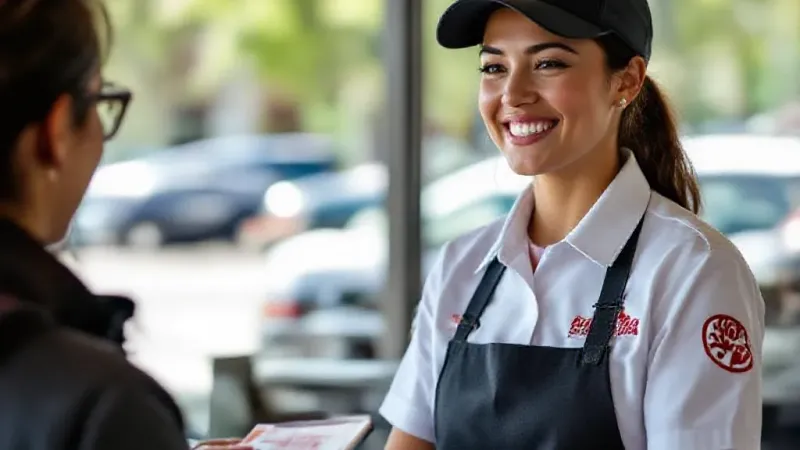
Chick-fil-A will maintain its focus on human interaction at its drive-thru lanes, opting not to implement artificial intelligence for customer ordering. Chick-fil-A leadership confirmed that patrons should continue to expect to be served by team members at restaurant locations, rather than automated systems.
Andrew Cathy, the company's CEO, recently shared in a CNBC interview that Chick-fil-A is not pursuing AI voice ordering in its drive-thru lanes. Cathy explained the rationale behind this decision, stating, "From our experience, we really want that hospitality to be human to human." He further emphasized that the company would not substitute this critical interaction with technology, asserting that hospitality is vital for creating a welcoming environment for consumers.
While Chick-fil-A leadership has clarified its stance on drive-thru automation, Cathy did note that the company is exploring opportunities to utilize AI for more behind-the-scenes operations. This suggests a strategic approach to technology adoption that prioritizes efficiency in non-customer-facing areas while preserving the direct customer service experience.
This decision by the popular chicken chain contrasts with moves by some of its fast-food competitors, who are actively advancing their automated order-taking plans. McDonald’s, for instance, has shared its intention to test a drive-thru AI assistant, which it calls Archy. Similarly, Wendy’s has already rolled out its own AI drive-thru ordering assistant, known as FreshAi. These developments highlight a growing trend within the quick-service restaurant industry to integrate artificial intelligence into customer interactions.
However, customer preferences appear to align with Chick-fil-A’s human-centric approach. Earlier this year, Forbes shared the findings of a survey conducted by SurveyMonkey, which indicated a strong consumer preference for human interaction. According to the survey, 79% of customers reported that they would prefer to interact with a human rather than an automated customer service system. This data suggests a potential disconnect between some industry trends and broader customer expectations for service.
Chick-fil-A's enduring focus on customer service is well-documented and has positioned it as a leader in customer satisfaction within the fast-food sector. For more than a decade, the company has consistently ranked among the top two spots on the American Customer Satisfaction Index. Furthermore, it has established itself as the clear leader in the fast-food chicken category, a reputation that industry observers link to its consistent emphasis on the customer experience. The decision to forgo AI in drive-thru ordering appears to be a continuation of this established strategy, aiming to preserve the personal touch that many customers reportedly value.
The company's commitment to human interaction for customer-facing roles, while exploring AI for background functions, reflects a nuanced understanding of its brand identity and customer expectations. As other chains experiment with new technologies, Chick-fil-A leadership appears resolved to double down on the human element that has defined its service model for years. This strategic choice may resonate with local patrons who appreciate personalized service in their daily routines, reaffirming the company's long-standing dedication to its established approach.