Caregivers across West Central Ohio, particularly those assisting loved ones with conditions like Alzheimer's, are encouraged to adopt a new perspective on their demanding roles. This shift involves recognizing the specific tasks and challenges of caregiving as the burden, while viewing the loved one themselves as a blessing.
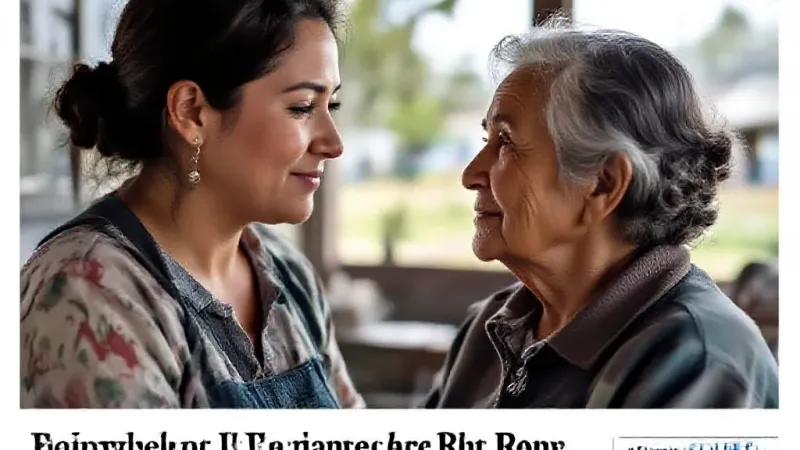
Ty Lewis, a certified dementia practitioner and content creator who cares for her mother, Gertrude, in the late stages of Alzheimer's, champions this viewpoint. Lewis, who utilizes social media as a vital lifeline for support, clearly defines the distinction. According to Lewis, the true burdens of caregiving are "the care, the financial piece," and the struggle of "not being able to find resources." In contrast, she emphasizes, "taking care of our loved one, being a servant leader, that is the blessing."
Lewis acknowledges that it is easy for caregivers to lose sight of this crucial difference on particularly hard days, but she stresses its importance for their journey. She notes that while the path is difficult, seeing the loved one as a blessing can lead to a special outcome, as caregivers become the necessary support for those who depend on them deeply.
Katherine Ambrose, an aging well coach, supports Lewis’s perspective, stating that such a reframing can "change a caregiver’s entire outlook." Ambrose suggests that this mindset distinguishes caregivers who find joy in their role from those who do not, by recognizing the inherent honor and the unexpected gifts and blessings that often accompany caregiving.
Gerontologist Sam Cradduck has taught this distinction for many years, drawing a comparison to the care required for a newborn. Cradduck points out that when a new baby arrives, parents face a significant workload, yet they never perceive the child itself as a burden; instead, she explains, "the workload is the burden." Cradduck highlights that this logical separation often becomes muddled when caring for aging loved ones, leading many seniors to express fears of being a burden.
Aging expert Amy O’Rourke, who cared for her own father, affirms that caregivers can experience both the burden and the blessing simultaneously. She recalled days of profound exhaustion feeling burdened, alongside moments with her father that brought happiness and connection. Dr. Rhea Rogers, a board-certified physician, echoes this sentiment, observing this duality in caregiving situations ranging from newborns to aging parents. Rogers underscores the importance of shifting one’s perspective to "zone in on the blessing," noting that many individuals would deeply cherish the physical presence of a parent, even one in the late stages of Alzheimer's.
Cradduck further elaborates that the emotional difference in how caregivers perceive a newborn versus an older adult often stems from grief. New parents, despite their exhaustion, view their child with joy and hope. However, caregivers for an older adult are often also experiencing grief, which can inadvertently cause them to project the burden onto the person rather than the demanding work of care. Cradduck advocates for maintaining the understanding that the person is always a human being, and the workload is the true burden, allowing caregivers to consistently see the blessing in their actions.
Both Dr. Rogers and Katherine Ambrose agree that this mindset applies universally across all caregiving scenarios. Rogers states that caregivers are there to be whatever their loved ones need, whether child or older person. Ambrose cautions that failing to adopt this mindset shift will only "make your burden worse," urging caregivers to "be open to the blessings" that emerge, as they are often unexpected and beautiful.