Ohio Senator Bernie Moreno is advocating for a temporary suspension of federal fuel taxes, echoing a move recently made by Ohio lawmakers. Moreno, a Republican, made his call on Thursday in a social media post, featuring a photo of Ohio lawmakers' votes on the state tax suspension. His push for federal action comes as Ohio’s state gas tax suspension officially began on Sunday.
The state's new policy has effectively reduced Ohio’s 38.5-cent-per-gallon gasoline tax and 47-cent-per-gallon diesel tax to "essentially nothing" through the end of 2026. Governor Mike DeWine signed the state legislation last Thursday. To compensate for the expected loss in revenue, Ohio plans to transfer $725 million from its general fund. Normally, the state gas tax helps fund Ohio's transportation system, including roads and infrastructure.
Moreno's statement included the phrase: "Now it’s time for the Federal Government to follow suit with a temporary suspension!" This mirrors a growing sentiment among some members of Congress to provide additional relief from higher fuel prices. The federal government levies its own fuel taxes: 18.3 cents per gallon on gasoline and 24.3 cents per gallon on diesel. These funds are primarily directed to the Highway Trust Fund, also supporting transportation infrastructure.
Several federal lawmakers have already proposed similar measures. In Congress, New Hampshire Democrat Rep. Chris Pappas and Arizona Democrat Sen. Mark Kelly introduced legislation last week that would suspend federal gasoline, diesel, and aviation fuel taxes until September 2027. Separately, South Carolina Republican Rep. Russell Fry proposed legislation calling for a national emergency declaration, which could lead to a federal gas tax suspension for up to 120 days. Former President Donald Trump also voiced support for suspending the federal gas tax in May, a move that would require congressional approval.
While proposals for federal fuel tax holidays have been made during past periods of economic stress, such as the COVID-19 pandemic, periods of high inflation, and the Great Recession in 2008 and 2009, the federal gas tax has never been suspended since the Highway Trust Fund's creation in 1956.
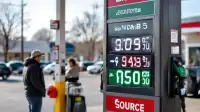
The current push for relief comes amid sustained higher fuel prices and ongoing international concerns impacting global oil markets. According to GasBuddy data cited by WCMH, Ohio’s average gasoline price reached a 2026 peak of $4.906 per gallon on May 1. The average price in Columbus reached $4.958 per gallon on the same day. Even with the United States producing a significant amount of its own oil, gasoline prices can still be influenced by international developments due to crude oil and refined fuel being traded in a global market.
Ohio's state tax break is part of a broader trend among states aiming to lessen the burden of high fuel costs for motorists. Ohio lawmakers reportedly drew inspiration from neighboring Indiana, where the state's 61-cent-per-gallon gas tax has been paused since early August. Georgia also enacted a temporary suspension of its 33-cent-per-gallon gas tax for one month after Governor Brian Kemp took action on Monday. At least 13 other states have introduced various measures to shield motorists from elevated fuel costs.
For Ohio drivers, the full benefit of the state tax suspension is not expected to be seen immediately. Experts cited by WCMH suggest that prices are likely to decline gradually over the course of the week, rather than dropping by the entire suspended amount all at once. This projection is contingent on no significant shifts in international oil prices. The state suspension is set to continue through the end of 2026, as Moreno and other lawmakers continue to press Congress for federal consideration of similar fuel tax relief.